
Imagine stepping off a plane into a new country, ready to build a life, start a business, or simply achieve the American Dream. You have savings, a solid work ethic, and big plans. But when you walk into a bank or go online to apply for a basic credit card, you hit a brick wall. The application asks for a Social Security Number (SSN). You don’t have one. Then, it checks for your credit history. You don’t have that either.
Welcome to the classic American financial catch-22: you need credit to get a credit card, but you need a credit card to build credit. When you add the lack of an SSN into the mix, the mountain can seem impossible to climb.
But here is the truth that many banks won’t advertise on their front windows: you do not need a Social Security Number to get a credit card in the United States. And you absolutely do not need an existing credit history to get your foot in the door.
Millions of immigrants, expatriates, international students, and foreign investors successfully build stellar US credit profiles every year using an Individual Taxpayer Identification Number (ITIN). If you are armed with an ITIN and the right strategy, the doors to the US financial system are wide open.
This comprehensive guide will walk you through exactly how to bypass the SSN requirement, bypass the “no credit history” rejection, and secure your first American credit card.
Demystifying the ITIN: Your Financial Key
Before we dive into credit card applications, we need to understand the tool that makes this all possible. The Individual Taxpayer Identification Number (ITIN) is a nine-digit tax processing number issued by the Internal Revenue Service (IRS).
What is an ITIN?
The IRS issues ITINs to individuals who are required to have a US taxpayer identification number but who do not have, and are not eligible to obtain, a Social Security Number from the Social Security Administration (SSA).
Historically, the ITIN was created for one specific purpose: to allow foreign nationals and other individuals to pay taxes. The IRS doesn’t care about your immigration status; they just want to ensure you can pay taxes on US-sourced income.
However, over the years, the US financial industry recognized a massive, untapped market of responsible consumers who held ITINs. Major credit bureaus (Equifax, Experian, and TransUnion) adapted their systems to track credit profiles using ITINs just as they do with SSNs.
SSN vs. ITIN in the Credit World
When an underwriter at a bank reviews a credit card application, their automated system looks for a nine-digit identifier to pull a credit report.
- An SSN is the standard identifier.
- An ITIN functions as an alternative identifier.
To the credit bureaus, an ITIN is simply a filing cabinet for your financial reputation. If you pay your bills on time using an ITIN-registered account, your credit score will climb just as fast as someone using an SSN. The math behind the FICO score is identical.
How to Apply for an ITIN (If You Don’t Have One)
If you are reading this and realize you need an ITIN, the process requires submitting Form W-7 to the IRS. You must also submit documents establishing your identity and your connection to a foreign country (a valid passport is usually the best document for this).
You can apply:
- By mailing the W-7 form and your original documents to the IRS.
- Through an IRS-authorized Certifying Acceptance Agent (CAA) in the US or abroad.
- In-person at a designated IRS Taxpayer Assistance Center.
The process can take anywhere from seven to eleven weeks, so patience is required. Once that official IRS letter arrives with your nine-digit number, you are ready for the next step.
The “No Credit History” Hurdle
Having an ITIN solves the identity problem. Now we must address the history problem.
Why do banks care so much about your credit history? In the lending world, past behavior is considered the best predictor of future behavior. When a bank lends you unsecured money (which is what a standard credit card is), they are taking a massive risk. They rely on your credit report to tell them if you have a habit of paying back borrowed money on time.
When your credit report is blank, you are not considered a “bad” borrower; you are a “ghost.” To a computerized risk-assessment algorithm, a ghost is a high risk because there is zero data to analyze.
Therefore, applying for premium rewards cards like the Chase Sapphire Reserve or the American Express Platinum right out of the gate is a guaranteed path to rejection. To break into the system, you must start with products specifically designed for individuals with “thin files” or no files at all.
The Arsenal: Types of Credit Cards for ITIN Holders
When you have an ITIN and zero credit history, your strategy must focus on accessibility rather than rewards. You will primarily be looking at two categories of credit cards.
1. Secured Credit Cards
Secured credit cards are the unsung heroes of the immigrant financial journey. They are hands-down the easiest, most reliable way to establish credit from scratch.
How they work:
When you are approved for a secured card, you are required to pay a refundable security deposit upfront. This deposit is usually equal to your credit limit. For example, if you put down a $500 deposit, the bank gives you a credit card with a $500 limit.
This is not a prepaid debit card. When you buy groceries with a secured card, the bank pays the merchant. At the end of the month, you receive a bill, and you must pay that bill out of your checking account.
Why banks love them:
The bank assumes zero risk. If you vanish or refuse to pay your bill, the bank simply keeps your security deposit to cover the debt. Because there is no risk, banks are incredibly willing to approve these cards for people with no credit history and only an ITIN.
Why you should love them:
Secured cards report your payment history to the three major credit bureaus exactly like a regular (unsecured) credit card. If you use it responsibly for six to twelve months, you will generate a strong credit score. Eventually, most issuers will “graduate” you to an unsecured card and mail you a check returning your original deposit.
2. Alternative Data (Fintech) Unsecured Cards
The financial technology (fintech) revolution has brought massive changes to how underwriting works. Several modern companies realize that a lack of credit history does not mean a lack of financial responsibility.
Instead of looking at a FICO score, these companies use “cash flow underwriting.” When you apply, you securely link your US bank account to their system. Their algorithms analyze your income, your spending habits, and your savings over the past few months.
If they see that you make a steady income and don’t overdraft your account, they will approve you for an unsecured credit card (no deposit required), even if you only have an ITIN and a blank credit report.
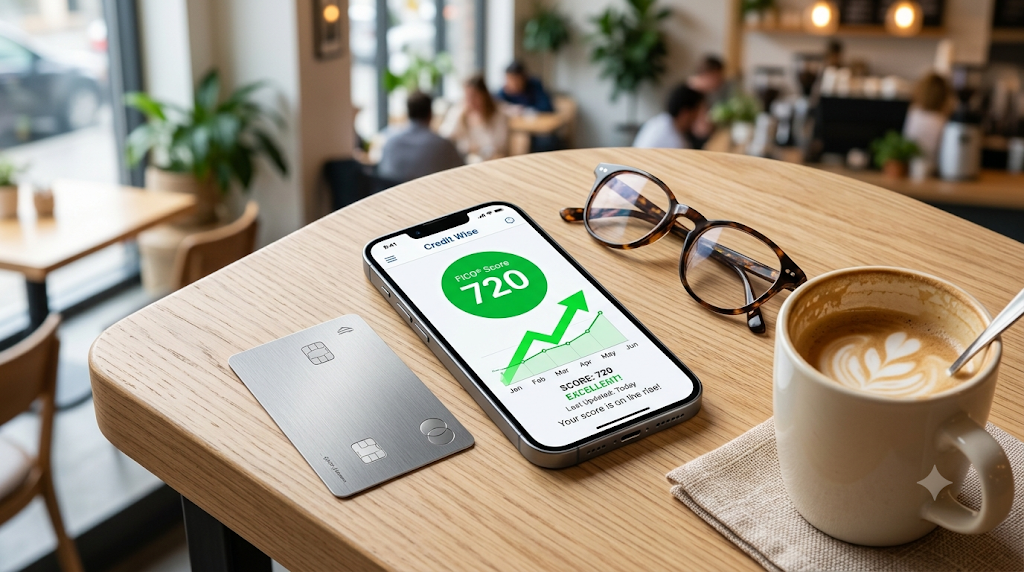
Top Credit Cards That Accept ITINs and No Credit History
Not all banks accept ITINs. For example, some major institutions stubbornly insist on an SSN for all online applications. To save you from frustrating rejections, here is a curated list of the best financial institutions and specific cards that are openly friendly to ITIN applicants with no credit file.
Bank of America
Bank of America is arguably the most immigrant-friendly traditional bank in the United States. They have a long-standing policy of accepting ITINs, and in some cases, they will even approve credit cards using just a foreign passport if you apply in person at a branch.
- Top Pick: Bank of America® Customized Cash Rewards Secured Credit Card
- Why it works: It’s rare for a secured card to offer cash-back rewards, but this one does. You can earn 3% cash back in a category of your choice (like gas or online shopping) and 2% at grocery stores (up to a quarterly cap).
- The ITIN Process: While you can sometimes apply online, the highest success rate for ITIN holders with zero history is to schedule an appointment and apply in-branch with a banker.
Capital One
Capital One is famous for its powerful technology and inclusive lending practices. They readily accept ITINs on their standard online application forms.
- Top Pick: Capital One Platinum Secured Credit Card
- Why it works: This is the gold standard for building credit. Depending on their assessment of your application, Capital One might offer you a $200 credit line for a deposit of $49, $99, or $200. This means you might not even have to put down the full limit in cash. They also automatically review your account for a higher credit line in as little as six months.
- The ITIN Process: You can apply seamlessly online. Where the form asks for a Social Security Number, you simply type in your nine-digit ITIN. The system recognizes the format automatically.
American Express (Amex)
American Express holds a reputation for luxury and exclusivity, making it seem impossible for newcomers. Surprisingly, they are incredibly progressive when it comes to international applicants.
- Top Pick: Any Entry-Level Amex (e.g., Blue Cash Everyday® Card)
- Why it works (The Nova Credit Loophole): If you have just arrived in the US but had a good credit history in your home country (such as the UK, Australia, Mexico, Canada, India, Brazil, and several others), Amex partners with a company called Nova Credit. During the online application, you can opt to have Nova Credit translate your home-country credit file into a US equivalent.
- The ITIN Process: You can apply online using your ITIN. If you use the Nova Credit feature, you can actually bypass the secured card phase entirely and get a premium unsecured Amex card on day one.
Petal (Issued by WebBank)
Petal is a trailblazer in the alternative underwriting space. They were built from the ground up for people who are locked out of the traditional credit system.
- Top Pick: Petal® 1 “No Annual Fee” Visa® Credit Card
- Why it works: Petal doesn’t require a security deposit. Instead, you link your primary checking account. They look at your real-time financial health—your income and bill payments—to determine your creditworthiness.
- The ITIN Process: Petal officially accepts ITINs in place of SSNs during their online application process. It is a seamless, digital-first experience.
Step-by-Step Guide: How to Execute Your Application
Applying for your first card requires a bit of tactical planning. Do not just blindly click “apply” on the first offer you see. Follow this sequence to maximize your chances of approval.
Step 1: Establish a US Banking Relationship
Before applying for a credit card, open a standard checking account with the bank you intend to apply to (like Bank of America or Capital One). Deposit some funds and use the account actively for a month or two. Banks are much more likely to approve a credit card application for someone who already has money sitting in their institution.
Step 2: Gather Your Documentation
If applying online, have your physical ITIN letter from the IRS nearby to ensure you type the number flawlessly. If you are going into a physical branch (highly recommended for Bank of America), bring a folder containing:
- Your physical ITIN letter.
- Your unexpired foreign passport.
- Proof of physical US address (a utility bill, lease agreement, or bank statement).
- Proof of income (pay stubs or an employment offer letter).
Step 3: Choose Your Battle
Select exactly one card to apply for. If you have the cash available, a secured card (like the Capital One Platinum Secured) is the safest bet with the highest approval odds.
Step 4: The Application
When filling out the application, you will be asked for your total annual income. Be honest, but inclusive. You can include any income you have reasonable access to, which can include a spouse’s income, scholarships, or regular allowances. Where it asks for an SSN, enter your ITIN.
Step 5: The Pending Verification Phase
Do not panic if you do not get an instant approval. When using an ITIN, the automated systems sometimes flag the application for manual review because it cannot find a credit file to match the number.
You may receive an email or a letter asking you to verify your identity. This usually involves uploading a photo of your passport and a utility bill through a secure portal, or calling their verification department. Comply quickly and politely. Once a human underwriter verifies your identity, they will push the approval through.
Case Study: Mateo’s Journey from Ghost to 740 FICO
To illustrate how effectively this works, consider the story of Mateo. Mateo moved to Texas from Colombia to work as a civil engineer. He had a great salary but no SSN (he was awaiting visa processing and applied for an ITIN in the interim) and zero US credit.
He attempted to buy a car but was told his interest rate would be 18% because he was a “credit ghost.” Frustrated, he decided to hack the system.
- Month 1: Mateo opened a checking account at Bank of America.
- Month 2: He scheduled an appointment with a banker and applied for the Bank of America Customized Cash Rewards Secured Card. He put down a $1,000 security deposit.
- Months 3 to 8: Mateo used his secured card like a debit card. He only bought groceries and gas, keeping his spending under $100 a month. He set up automatic payments so the balance was paid in full three days before the due date every single month.
- Month 9: Mateo received a letter in the mail. Bank of America had automatically reviewed his account. Because of his flawless payment history, they upgraded his card to an unsecured version and mailed him a check for his $1,000 deposit.
- Month 10: Mateo checked his credit score for the first time. The algorithm finally had enough data to generate a score. He had a FICO score of 740.
- Month 11: Mateo went back to the car dealership. With a 740 credit score, he qualified for a promotional 3.9% interest rate on his auto loan, saving him thousands of dollars over the life of the loan.
Mateo’s story proves that the system isn’t rigged; it just has very specific rules of engagement.
Building Credit Fast: The Rules of the Game
Getting the card is only step one. How you use it in the first six months dictates how fast your credit score will grow. Credit scoring algorithms are complex, but for a beginner, you only need to master two golden rules.
Rule #1: The 10% Utilization Rule
Your “Credit Utilization Ratio” makes up 30% of your credit score. This is the percentage of your available credit that you are currently using.
If you have a secured card with a $300 limit, and you spend $250 on it, your utilization is 83%. The credit bureaus view this as incredibly risky behavior—it looks like you are maxing out your accounts and desperate for cash. Your score will plummet.
The Hack: Keep your statement balance below 10% of your total limit. If your limit is $300, never let a bill generate for more than $30. The best strategy is to use the card for one small subscription (like Netflix or Spotify) and put the physical card in a drawer.
Rule #2: Flawless Payment History
Payment history makes up 35% of your credit score, making it the most critical factor. A single missed payment can tank your score by 50 to 100 points and will stay on your credit report for seven years.
The Hack: Turn on Auto-Pay the day you activate the card. Set it to pay the “Statement Balance in Full.” Do not set it to the minimum payment. Paying in full ensures you never pay a single cent in interest, making the credit building process entirely free.
A Note on Hard Inquiries
Every time you apply for credit, the bank pulls your credit report, resulting in a “hard inquiry.” A hard inquiry drops your score by a few points.
Do not apply for five credit cards at once hoping one will stick. This will result in five hard inquiries, making you look desperate for credit, which will lead to automatic rejections across the board. Apply for one card. If rejected, find out why, fix the issue, and wait 30 days before trying a different bank.
Alternative Paths: Beyond the Credit Card
While secured credit cards are the gold standard, you can supplement your strategy with other credit-building tools that accept ITINs.
Credit Builder Loans
Companies like Self (formerly Self Lender) offer specialized loans designed solely to build credit. Instead of giving you money upfront, Self puts the loan amount into a locked Certificate of Deposit (CD). You make monthly payments (e.g., $25 a month) for a year. Self reports these on-time payments to the credit bureaus. At the end of the year, the CD unlocks, and you get your money back (minus a small administrative fee). Self accepts ITINs and does not require a credit history.
Rent Reporting Services
If you are renting an apartment, you are already making a massive monthly payment that does absolutely nothing for your credit score. Companies like Boom or Esusu can act as a middleman. You pay a small fee, and they verify your rent payments with your landlord and report them to the credit bureaus as a positive trade line. This can thicken your credit file rapidly without taking on any new debt.
Comparison Table: Secured vs. Alternative ITIN Cards
| Feature | Traditional Secured Card (e.g., Capital One) | Alternative Data Card (e.g., Petal 1) |
|---|---|---|
| Deposit Required? | Yes, usually $49 to $1,000. | No. Unsecured from day one. |
| Credit History Needed? | No. | No. |
| ITIN Accepted? | Yes. | Yes. |
| Underwriting Method | Based on security deposit & identity verification. | Based on cash flow (linking your bank account). |
| Risk of Rejection | Very Low. | Moderate (depends on your bank account health). |
| Graduation Path | Upgrades to an unsecured card after 6-12 months. | Automatically grants credit limit increases. |

Summary
Navigating the US financial system without a Social Security Number can feel like trying to decipher a foreign language without a dictionary. However, the system is not impenetrable. By obtaining an Individual Taxpayer Identification Number (ITIN), you unlock a legitimate, recognized pathway to establishing a financial identity.
The key to overcoming the lack of a credit history is humility and strategy. You cannot jump straight to the premium travel cards. Instead, you must prove your reliability through secured credit cards like those offered by Capital One and Bank of America, or leverage modern fintech solutions like Petal that analyze your banking habits instead of a FICO score.
Once approved, the blueprint for success is simple: use less than 10% of your available credit and automate your payments to ensure the balance is paid in full every single month.
Conclusion
Financial exclusion is a frustrating reality for many new arrivals to the United States. It impacts where you can live, what kind of car you can drive, and whether you can start a business. But a lack of credit history is a temporary state, not a permanent diagnosis.
Your ITIN is a powerful tool. A secured credit card is the key in the ignition. By taking deliberate, calculated steps today, you are laying down the financial infrastructure for your future. Within a remarkably short time—often less than a year—you will transition from a financial “ghost” to an empowered consumer with a prime credit score. You will no longer be asking banks for favors; they will be competing for your business. Take that first step, gather your documents, and start building your American financial foundation today.